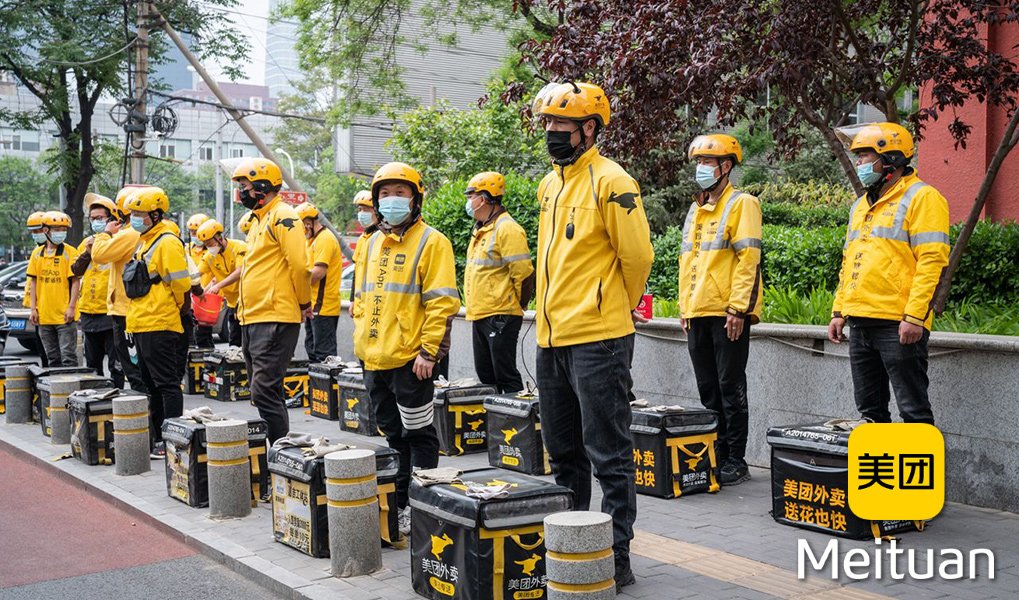
Have you ever wondered what resilience truly looks like? Consider Wang Xing, a man whose career is a masterclass in bouncing back from setbacks and turning lessons from each failure into fuel for relentless innovation. Today, as the visionary leader behind Meituan, China’s tech juggernaut valued at approximately $150 billion, Wang’s journey inspires entrepreneurs around the globe.
Longyan: The Unlikely Cradle of Digital Titans
Few people outside China have heard of Longyan, a small city tucked away in Fujian Province. Yet, this seemingly unremarkable place has produced some of the nation’s most influential internet entrepreneurs, including Zhang Yiming of ByteDance and Fang Sanwen of Xueqiu. At the heart of this “Longyan miracle” stands Wang Xing, whose story intertwines family legacy, hardship, and ambition.
A Privileged Start with a Twist
Born in 1979 in Fujian, Wang Xing grew up in a family that prized both knowledge and achievement. His grandfather was an esteemed educator who served as the dean at Longyan No.2 Middle School. His grandmother, a graduate of Xiamen University, had studied under Wang Yanan, one of China’s most revered economists and the chief translator of Das Kapital. Tragedy, however, left deep scars: Wang Xing’s grandfather was a victim of the Cultural Revolution, a loss that haunted the family for years.
After the turmoil, Wang Xing’s father, Wang Miao, was forced to labor in the fields and work as a construction worker due to his family’s background. He started from scratch, literally with his hands in the soil, before taking up masonry and then moving on to small construction projects. By 1981, Wang Miao had already earned over 30,000 yuan, a fortune at a time when becoming a “ten-thousand-yuan household” was the dream of many. His business acumen only grew from there. By 1992, after several setbacks and two years of stalled mining operations, he boldly invested all of his savings, about three million yuan into building a cement factory. That factory would eventually grow into a powerhouse, producing two million tons annually with revenues close to one billion yuan. Wang Miao became a symbol of self-made wealth in Longyan, driving a Mercedes and living in an 800 square meter villa at the foot of Tianma Mountain, yet always choosing a life of quiet discipline over extravagance.
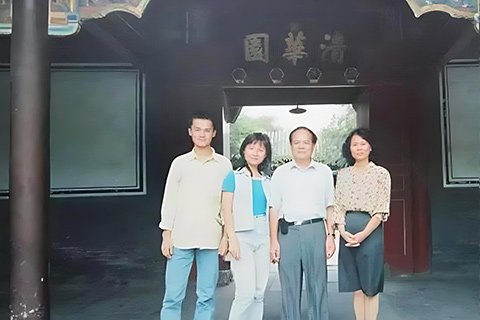
Wang Xing’s mother was equally accomplished, graduating from Xiamen University and contributing to a household culture where education and integrity mattered more than appearances. Both Wang Xing and his older sister excelled academically, with each earning admission to Tsinghua University, one of China’s most elite schools. Later, Wang’s sister married a Peking University graduate, giving rise to the local nickname “one family, three exam champions.”

Family Values: The Foundation of Resilience
What truly shaped Wang Xing, however, was his family’s approach to parenting. Wang Miao, despite his own achievements, never interfered with his children’s choices. He encouraged independence, valued effort over comfort, and supported his son through every up and down. When Wang Xing struggled to pay his staff after yet another failed startup, his father quietly lent him 500,000 yuan with no strings attached. This unwavering support provided Wang Xing with a crucial safety net, allowing him to embrace risk and recover from defeat time and again.
Early Experiments and Painful Lessons
After studying electronic engineering at Tsinghua University and earning a master’s degree from the University of Delaware, Wang Xing returned to China at the dawn of its internet age. Like many of his peers, he was eager to seize the new digital frontier. But his early ventures met with disappointment.
His first project, Duoduoyou, was a Friendster-style social network that flopped due to poor design and lack of users. Not deterred, Wang then created Xiaonei, a campus-based social network inspired by Facebook. Xiaonei quickly attracted attention and users, but financial constraints forced Wang to sell it for just $2 million. The pain would only deepen as Xiaonei’s new owner, Chen Yizhou, rebranded the site as Renren, secured $430 million in investment from Masayoshi Son, and took the company public in the United States with a peak valuation exceeding $6 billion. For Wang, seeing his “child” flourish in another’s hands was both humbling and instructive. It underscored the importance of capital, control, and investor relationships lessons that would shape his future strategy.
Wang’s resilience was tested repeatedly. Over the course of seven years, he started and closed more than ten different ventures. His personal motto became “nine failures, one win.” It was only with his family’s encouragement and backing that he found the strength to keep trying.
Fanfou: Rising High, Falling Hard
Undeterred by previous losses, Wang’s next big move was Fanfou, a microblogging site modeled after Twitter. Fanfou rapidly gained a million users, positioning Wang as a digital trailblazer. However, the platform soon attracted the attention of Chinese regulators and was abruptly shut down for nearly two years. Competitors quickly filled the void, and another promising chapter closed. This episode taught Wang how fragile success could be in China’s unique regulatory environment.
The Birth of Meituan: Battle-Tested Strategy
When Wang launched Meituan in 2010, the competition was nothing short of brutal. The group-buying market was teeming with thousands of copycat startups, each vying for a piece of the pie in what became known as the “Thousand Group Buy War.” Instead of confronting the biggest players head-on in China’s wealthiest cities, Wang made a bold move. He dispatched Meituan’s sales teams into third- and fourth-tier cities, quietly building market share where others saw little value.
A cornerstone of Meituan’s early growth was its relentless focus on trust. Wang introduced automatic refunds, a rarity in China’s fledgling e-commerce scene, which quickly won over skeptical consumers. His strategic framework of “three highs and three lows” high quality at low price, high efficiency at low cost, high technology at low profit margins became the DNA of the company. These moves set Meituan apart and fueled its rise as a daily essential for millions.
From Local Deals to Super App
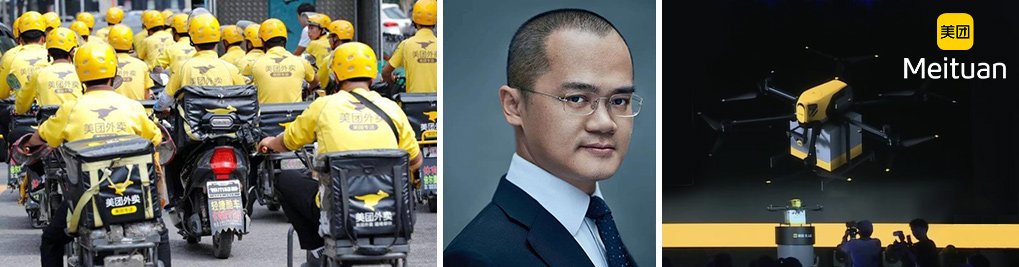
Wang’s strategic vision paid off when Meituan merged with Dianping in 2015, forming an O2O (online-to-offline) powerhouse. Meituan soon overtook Ele.me to dominate China’s food delivery market, commanding over 70 percent of the market share. The company continued to diversify, branching into hospitality, ride hailing, travel bookings, and financial services. Meituan became a one-stop super app, creating an ecosystem so comprehensive that rivals struggled to compete.
Facing Storms and Controversies
Wang Xing’s path has never been free from turbulence. In 2021, Meituan was fined $530 million for anti-competitive practices. That same year, Wang’s poetic musings on social media, reflecting his love of literature and philosophy, inadvertently triggered controversy and a sharp decline in Meituan’s stock price. True to form, Wang responded with transparency aligning Meituan more closely with government initiatives, improving worker welfare, and reassuring investors through a series of bold reforms.
Beyond China: Global Ambitions
With Meituan’s dominance established at home, Wang now has his eyes set on international horizons. After launching in Hong Kong and Saudi Arabia, Meituan is preparing a cautious yet ambitious $1 billion expansion into Brazil. Wang’s approach prioritizes local partnerships, logistics expertise, and cultural adaptation over the reckless pursuit of market share. For Wang, global expansion is not about being the fastest, but about being the most enduring.
A Legacy of Philanthropy and Innovation
Wang Xing’s story is about more than just business success. He has donated nearly $3 billion to education and scientific research, a reflection of his family’s values and his commitment to shared prosperity. Within Meituan, he has launched initiatives such as the “Qingshan Plan,” aimed at environmental sustainability and improved worker welfare. Wang’s impact continues to ripple outward, transforming not just industries, but also communities.
Lessons from the Poet Entrepreneur
Often called the “poet entrepreneur” for his intellectual curiosity and love of literature, Wang Xing’s journey is a testament to the power of resilience, adaptability, and clear-sighted strategy. His transformation from a serial failure to a digital emperor offers a practical blueprint for anyone facing the storms of entrepreneurship. Wang’s path reminds us that setbacks are not endpoints, but stepping stones on the journey to enduring greatness.